Shop Book
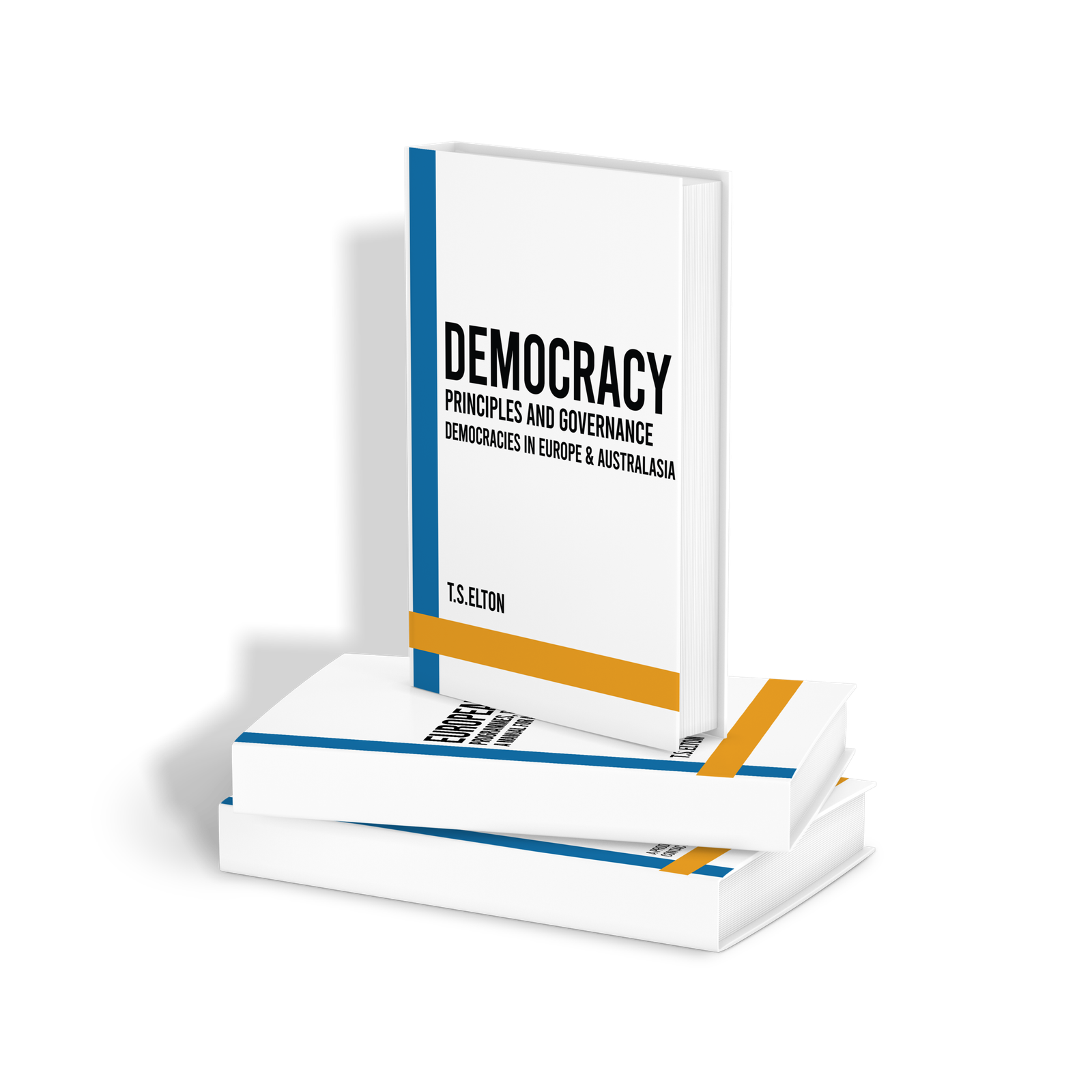
DEMOCRACY, PRINCIPLES AND GOVERNANCE DEMOCRACIES IN EUROPE AND AUSTRALASIA
T.S.Elton
In this book citizens are provided with an overall consolidated account of democracy, the institutions of democratic government and the principles for good governance and goes on to discuss what makes democracy strong, what weakens democracy and what gives rise to backsliding. Citizens come to understand that integral to good governance are political leaders committed to democratic principles such as accountability, transparency and the rule of law, respecting the separation of powers in the Legislative, Executive and Judicial institutions and the intricate system of checks and balance. Democratic governance is based on shared responsibility between Government, the Private Sector and Civil Society. The book goes on to describe the European Union, the institutions of governance and the participation of Member States in the various governing procedures. Addressed are the governing institutions of the European Union: the EU Parliament, the Council of the European Union, the Commission, and supporting agencies such as the European Council and the Agencies with specific agendas.
The EU is not only a political Union,it is also a community of values that rest on the rule of law and respect for the rights and freedoms of the individual and the promotion of peace and stability. The EU aims for sustainable development, free and fair trade in a single internal market, enabling goods, services, money and people to move freely throughout most of the continent without technical, legal and bureaucratic barriers.
Central to evolving policies are various funding programmes undertaken through collaborative efforts with member states, in areas such as climate change, protecting the environment and securing sustainable energy, protecting citizens` health from local and global health threats, ensuring food safety, securing support following natural and economic disasters within the spirit of solidarity.
The book adeptly draws on connections to international bodies offering readers valuable insights into how global politics directly impacts within their home countries. The intricate web of connections underscores the interdependence of democratic governance and the broader global scale through international bodies which support the EU aims for strong, open and fair trade, multilateralism and rules-based global order (priority 5). International bodies supporting a rules-based international order are described including the United Nations, the Organisation for Security and Cooperation in North America (OSEC), North Atlantic Treaty Organisation (NATO), The UN Security Council, UN Office for disarmament, The International Court of Justice, Interpol, the International Criminal Court, the Universal Declaration of Human Rights; The United Nations Rights Council; UN World Trade Organisation with 164 member countries, of which the US was the original member and is a steadfast supporter of the rules-based multilateral trading system and the G7 (an intergovernmental political and economic forum consisting of the United States, the EU, the UK, Canada, France, Germany, Italy and Japan); The role of the UN convention on the law of the sea; Other major international organisations addressed include FAO, World Health Organisation, IUCN, UNESCO.
The book supports the EU Commission priorities for the European Union which indicate a strong need to engage more widely with citizens in shaping the EU`s future (priority 6). Indeed, to engage more widely citizens need to understand how the EU uses democratic processes to implement policies through the various collaborative funding programmes and how these support development in member states. The EU aims for strong, open and fair trade, multilateralism and a rules-based global order (priority 5), thus supporting similar priorities across the democratic world. Informed citizens act as a bulwark against the pervasive threat of disinformation, exacerbated by digitalization that allows for disinformation to be disseminated with unprecedented speed and efficiency. Informed citizens recognise their role as custodians of their own security and freedom, prompting meaningful participation in political processes. A chapter goes on to describe democracy in Australasia: Australia and New Zealand demonstrating solidarity across the western world, an awakening that strength lies in international solidarity promoting collective well-being, peace and security across the world.
The book supports the EU Commission priorities which indicate a strong need to engage more widely with citizens in shaping the EU`s future (priority 6). Informed citizens act as a bullwork against the pervasive threat of disinformation, exacerbated by digitalization that allows for disinformation to be disseminated with unprecedented speed and efficiency. Informed citizens recognise their role as custodians of their own security and freedom. Connecting people to their civic power is central to an effective democracy. This book is a powerful means to fortify democracy across the western world.
The Student Work Programme provided in this book consists of:
Twelve recall questions; Two Advanced questions; Seven Topics for discussion; Websites for research (29).
Primary and secondary sources, scholarly articles from leading academic institutions, international political media and websites of academic authors have been sourced. These websites are listed with the bibliography and encourage the reader to pursue further global political developments.
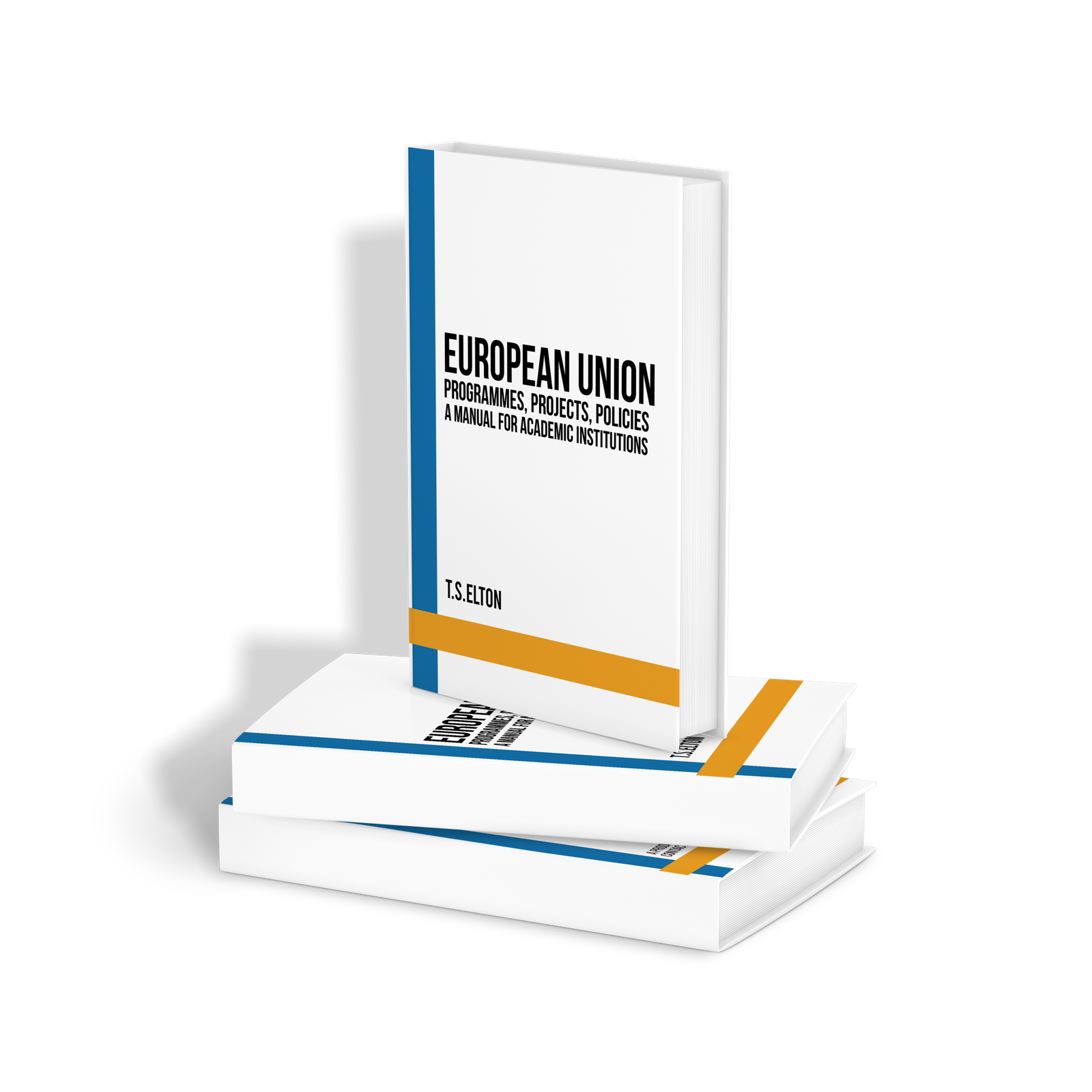
EUROPEAN UNION PROGRAMMES, PROJECTS, POLICIES
A Manual for Academic Institutions
T.S. Elton
This book focuses on European Union Programmes, Projects, and the collaborative effort with member states in the formulation of policies. The book provides a consolidated account describing how EU policies have been developed through EU wide Programmes, Initiatives and Missions based on Cooperation, Diplomacy and Funding in collaboration with Member States. Discussed in detail are specific areas such as Economy; Regional Development and Cohesion; Natural Resources and Environment; Neighbourhood and the World; Security and Defence; Energy; The Horizon Framework Programme; The Global Gateway flagship project; Digital Europe; Pollution, Health and Environment; The Green Deal; Zero Pollution of Air, Water, Soil; Chemicals Strategy; Circular Economy; Clean Industrial Deal; Net Zero Action Plan; Environment, Climate and Health; Biodiversity; Restoring our Ocean and Waters by 2023; Food Production (Agriculture, Fisheries and Oceans) and others. By using a collaborative approach with EU member states, policies are effective and accepted across environmental, social and economic dimensions.
The Student Work Programme in this book is made up of fifty-five INFO SHEETS addressing specific policy areas. Activities for students provided in the INFO SHEETS, consist of questions as well as videos and references for further research to be undertaken by the students. Students read the set material (INFOSHEET) and answer at least one question from the Activities in the INFO SHEET. Based on research and discussion, the book provides students with the opportunity to develop a sound information base on EU policies and their impact on the lives of citizens.
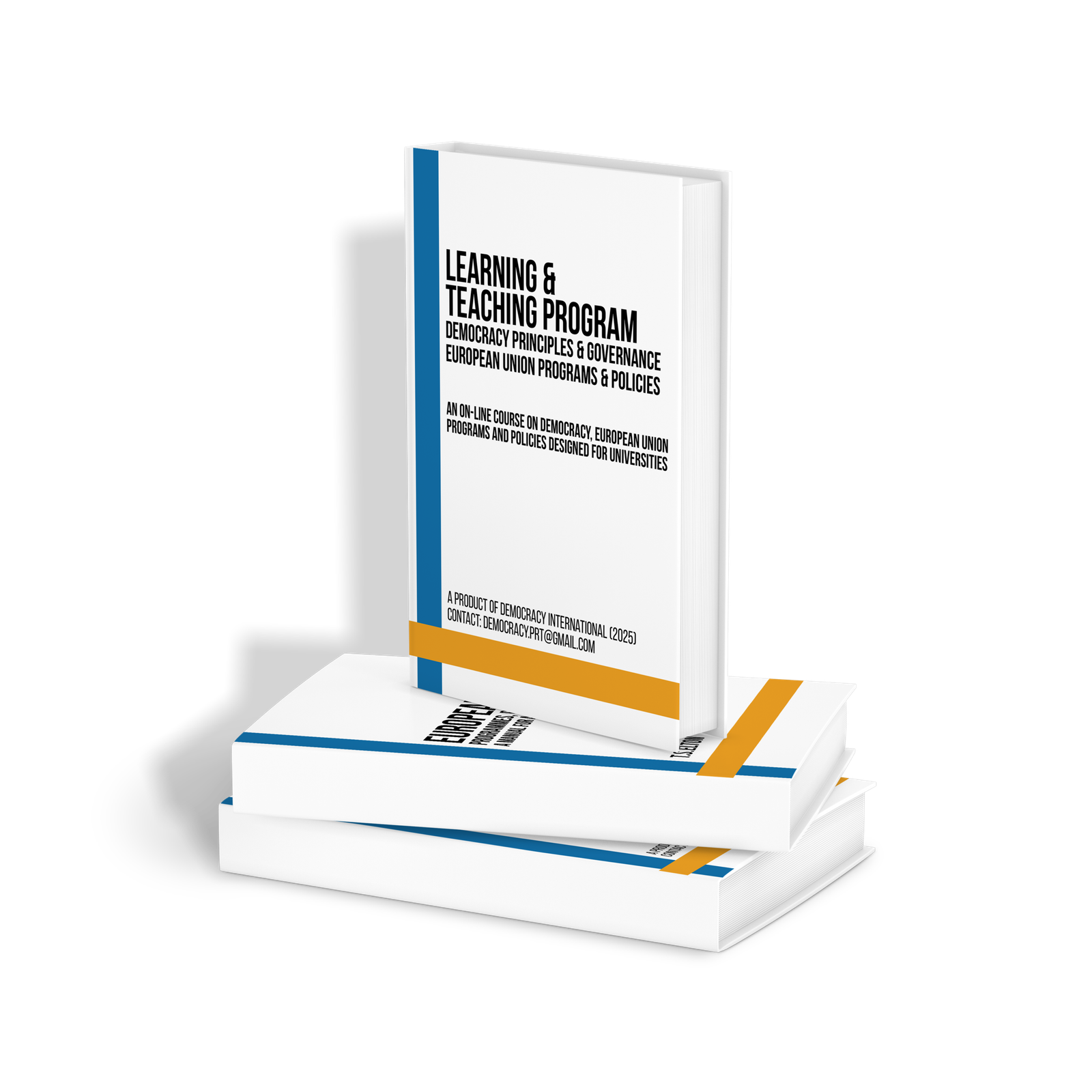
This book provides Academic Institutions with a Program Plan suitable to apply for funding to teach a course on Democracy and the European Union. The book covers standard topics required in most applications, though further information could be required by particular institutions to tailor the application to their particular requirements.
In this book you will find: Executive Summary, PROGRAM Description, Implementation Plan, Expected Outcomes and Impact, Monitoring and Evaluation, Sustainability Plan, Risk Assessment and Mitigation, Impact Statement, Conclusion. Also provided are Reviews of the two program books, namely:
Democracy, Principles and Governance,
Democracies in Europe and Australasia.
T.S, Elton (2025)
European Union
Programmes, Project and Policies
A Manual for Academic Institutions
T.S.Elton (2025)
When applying for funding make sure you obtain full information on the requirements of the funding institutions such as: Statement of Need, Budget, the academic qualifications of teaching staff and resources provided by the institutions applying for funds.